
midland weather radio wr 120 manual
Midland WR120 Weather Radio: A Comprehensive Guide
This guide delves into the Midland WR120, offering a detailed exploration of its features, setup, and operation, referencing available manuals and resources.
Accessing the WR120EZ_User_Manual_v.2_070919_5 is crucial for quick start instructions and understanding the radio’s capabilities, as highlighted by online documentation.
Numerous sources, including manuals.plus and the Internet Archive, provide access to the WR-120 owner’s manual, aiding in optimal usage and safety.
The Midland WR120 is an All Hazards Alert Weather Radio designed to keep you informed about critical weather conditions and emergency situations. This radio receives broadcasts from the National Oceanic and Atmospheric Administration (NOAA), providing timely alerts for watches and warnings in your specific area. Understanding its functionality, as detailed in the WR120EZ_User_Manual_v.2_070919_5, is paramount for effective emergency preparedness.
This comprehensive guide will navigate you through the radio’s features, from initial setup and S.A.M.E. code programming to troubleshooting common issues. Resources like manuals.plus and the Internet Archive offer readily available versions of the WR-120 owner’s manual, ensuring you have access to detailed instructions. The radio’s ability to receive NOAA broadcasts, coupled with the S.A.M.E. (Specific Area Message Encoding) feature, allows for targeted alerts, minimizing false alarms and maximizing relevance.
Whether you’re preparing for severe weather in Michigan, as one user described, or simply seeking peace of mind, the Midland WR120, when properly configured following the instructions in the owner’s manual, is a valuable tool for staying safe and informed.
Key Features and Benefits
The Midland WR120 boasts several key features enhancing emergency preparedness. Primarily, it’s a NOAA Weather Radio, delivering official weather forecasts and alerts directly from the National Weather Service. The S.A.M.E. (Specific Area Message Encoding) functionality, detailed in the WR120EZ_User_Manual_v.2_070919_5, allows users to program specific county codes, receiving alerts only for relevant locations – minimizing unnecessary alarms.
Beyond basic weather alerts, the WR120 provides All Hazards alerts, covering a wide range of emergencies. Access to the owner’s manual via resources like the Internet Archive and manuals.plus simplifies setup and operation. An external alert jack allows connection to compatible devices, expanding notification options.
The benefits are clear: increased safety, informed decision-making during severe weather, and peace of mind. Following the instructions within the WR120 owner’s manual ensures optimal performance and reliable access to critical information, making it a vital component of any emergency plan.

Understanding the WR120 Controls & Interface
Referencing the WR120EZ_User_Manual_v.2_070919_5, this section details the radio’s controls, ensuring users can navigate its functions effectively for optimal performance.
Powering On/Off and Basic Operation
The Midland WR120 initiates operation simply; insert batteries or connect the AC adapter, and utilize the power button, as detailed in the WR120EZ_User_Manual_v.2_070919_5. Initial setup involves a self-test, confirming functionality of the LCD display and alert indicators.
Basic operation centers around channel selection, navigating through NOAA weather broadcasts. The manual emphasizes the importance of understanding the available channels for your specific geographic location. Volume control is straightforward, adjusting audio levels for clear reception. The radio automatically scans for stronger signals, ensuring optimal listening.

Powering off is equally simple, using the same power button. Conserving battery life is addressed in the manual, recommending battery removal during extended periods of non-use. Familiarizing yourself with these fundamental steps, as outlined in the owner’s manual, is crucial for reliable performance.
The Directional Pad Functionality
The Midland WR120’s directional pad, a core component of its interface, facilitates navigation through menus and settings, as comprehensively explained in the WR120EZ_User_Manual_v.2_070919_5. Up and down arrows allow for channel selection, scrolling through available NOAA broadcasts and memory locations.
Left and right arrows are utilized for adjusting settings like volume, squelch, and S.A.M.E. code programming. The manual highlights the importance of understanding each function assigned to these directional controls. Pressing the center button typically confirms selections or activates features.
Mastering the directional pad is essential for efficient operation. The owner’s manual provides a detailed breakdown of each function, ensuring users can easily access and customize their weather radio experience. Proper utilization unlocks the full potential of the WR120’s features.
S.A.M.E. Code Programming
S.A.M.E. (Specific Area Message Encoding) code programming is a critical function of the Midland WR120, allowing users to receive alerts only for their specific county or area, as detailed in the WR120EZ_User_Manual_v.2_070919_5. This prevents unnecessary alerts from neighboring regions.
The manual outlines a step-by-step process for entering your S;A.M.E. code using the directional pad. Incorrect code entry can result in missing vital weather warnings. Resources like online databases assist in finding the correct six-digit code for your location.
Proper S.A.M.E. code programming ensures targeted alerts, enhancing the radio’s effectiveness. Regularly verifying the code’s accuracy is recommended. The WR120 owners manual emphasizes the importance of this feature for personalized emergency notifications.

Setting Up Your WR120 for Optimal Reception
Initial setup involves channel selection and S.A.M.E. code programming, as outlined in the WR120 manual, to ensure accurate and localized weather alerts.
Initial Setup and Channel Selection
Upon unboxing your Midland WR120, the first step involves powering the device and initiating the channel selection process. The owner’s manual, specifically WR120EZ_User_Manual_v.2_070919_5, provides detailed quick start instructions for this crucial stage. Begin by ensuring the unit is properly powered, either via batteries or the AC adapter.
The WR120 automatically scans through all available NOAA Weather Radio frequencies. However, for optimal performance, it’s recommended to manually select the channel corresponding to your geographic location. Refer to the NOAA website or the manual’s channel chart to identify the correct frequency for your area.
The directional pad, as described in available documentation, facilitates easy navigation through the channel options. Once the appropriate channel is selected, the radio will begin receiving weather broadcasts. Remember to consult the manual for specific instructions on utilizing the directional pad for efficient channel selection and confirmation.
Understanding Specific Area Message Encoding (S.A.M.E.)
S.A.M.E. (Specific Area Message Encoding) is a vital feature of the Midland WR120, allowing you to receive alerts only for your designated county or area. The WR120EZ_User_Manual_v.2_070919_5 details the S.A.M.E. code programming process. This ensures you aren’t disturbed by warnings irrelevant to your location.
Each county is assigned a unique six-digit S.A.M.E. code. You can find your county’s code on the NOAA website or within the radio’s manual. Programming this code into the WR120 filters incoming alerts, delivering only those pertinent to your specific geographic region.
Incorrect S.A.M.E. code entry can result in missed alerts or reception of warnings for neighboring areas. The manual provides step-by-step instructions for accurate programming, utilizing the directional pad for input. Properly configured S.A.M;E. functionality significantly enhances the radio’s effectiveness as a localized emergency alert system.
Adjusting Volume and Squelch
The Midland WR120 offers adjustable volume control for comfortable listening, detailed within the WR120EZ_User_Manual_v.2_070919_5. Volume is typically adjusted using dedicated buttons or the directional pad, allowing for personalized sound levels during normal operation and alert reception.
Squelch control minimizes unwanted static and noise when no signal is present. Adjusting the squelch level, as explained in the manual, determines the signal strength required to break through and activate the audio. A higher squelch setting reduces noise but may also block weak signals.
Finding the optimal squelch level is crucial for reliable reception. Start with a low setting and gradually increase it until the static disappears, ensuring you still receive weak but important weather broadcasts. Proper volume and squelch settings enhance the radio’s usability and clarity.
Alerting and Warning Systems
The WR120 delivers NOAA weather alerts, differentiating between watches and warnings, crucial for safety, as detailed in the owner’s manual (WR120EZ_User_Manual_v.2_070919_5).
NOAA Weather Alerts Explained
The Midland WR120 is designed to receive NOAA (National Oceanic and Atmospheric Administration) Weather Radio broadcasts, providing critical alerts directly to the user. These alerts cover a wide range of hazardous weather conditions, including severe thunderstorms, tornadoes, hurricanes, floods, and winter storms. Understanding the system is paramount for safety, and the WR120 owner’s manual (WR120EZ_User_Manual_v.2_070919_5) provides detailed guidance.
NOAA Weather Radio utilizes a nationwide network of transmitters broadcasting weather and hazard information 24/7. The WR120 automatically scans these frequencies, and when a hazardous weather alert is issued for your programmed area (via S.A.M.E. code), the radio activates, providing both audible and visual notifications. This ensures you are immediately informed of potentially life-threatening situations. The radio’s ability to receive these alerts is a key feature, offering peace of mind and proactive safety measures, as outlined in available online resources and the official documentation.
Understanding Watch vs. Warning
NOAA Weather Radio alerts received on your Midland WR120 differentiate between “Watches” and “Warnings,” and understanding this distinction is crucial for appropriate response. A Watch means conditions are favorable for a hazardous weather event to develop in your area. Remain prepared, monitor updates, and have a plan in place. The WR120 will alert you to the watch, prompting vigilance.
Conversely, a Warning indicates that a hazardous weather event is occurring or is imminent in your area. Immediate action is required to protect life and property. Seek shelter immediately. The WR120’s alarm will sound, signaling the urgency of the situation. Refer to your local emergency management agency and the WR120 owner’s manual (WR120EZ_User_Manual_v.2_070919_5) for specific safety guidelines. Knowing the difference empowers informed decision-making during severe weather, maximizing safety for you and your family.
External Alert Jack Connection
The Midland WR120 features an external alert jack, allowing connection to compatible alarm systems or devices for amplified notification during weather emergencies. This jack enhances awareness, particularly useful for individuals with hearing impairments or in noisy environments. Connecting an external device triggers an alert alongside the radio’s internal alarm, ensuring you don’t miss critical NOAA weather warnings.

Consult the WR120 owner’s manual (WR120EZ_User_Manual_v.2_070919_5) for specific compatibility details and wiring instructions. Ensure the external device is properly grounded and designed for use with Midland weather radios. Improper connection may damage the radio or the connected device. This feature provides an extra layer of safety, extending the reach of vital weather alerts beyond the radio itself, bolstering preparedness.

Troubleshooting Common Issues
Refer to the WR120 owner’s manual (WR120EZ_User_Manual_v.2_070919_5) for solutions to signal loss, S.A.M.E. code errors, and battery operation concerns.
Radio Not Receiving Signal
If your Midland WR120 isn’t receiving a signal, several factors, detailed in the owner’s manual (WR120EZ_User_Manual_v.2_070919_5), could be at play. First, ensure the radio is powered on and the volume is appropriately adjusted. Verify you’ve selected a valid NOAA channel; incorrect channel selection prevents reception.
Next, check the S.A.M.E. code programming. While not directly impacting signal reception, an incorrect code means you won’t hear alerts for your area. Consider your location; reception can be weak in basements or areas with obstructions. Experiment with repositioning the radio closer to a window or in a more open space.
Furthermore, explore utilizing an external antenna (discussed in advanced features) to boost signal strength. The manual also suggests checking battery levels, as low batteries can diminish performance. Finally, confirm that NOAA broadcasts are active in your region; occasional transmitter maintenance can cause temporary outages.
S.A.M.E. Code Errors
Encountering S.A.M.E. code errors on your Midland WR120, as detailed in the WR120EZ_User_Manual_v.2_070919_5, typically indicates an incorrect or invalid code has been entered. The radio will often display an error message or fail to issue alerts. Double-check the code against official sources – the NOAA website provides a lookup tool based on your county.
Ensure accurate entry; even a single digit error prevents proper functioning; The manual outlines the programming procedure, emphasizing careful input using the directional pad. If the error persists, attempt resetting the radio to factory defaults and re-entering the code.
Occasionally, the NOAA system itself may experience temporary issues. However, consistently failing to receive alerts despite a verified code suggests a problem with the radio’s S.A.M.E; decoder. Contacting Midland support may be necessary for further assistance.
Battery Operation and Replacement
The Midland WR120 operates on both AC power and batteries, offering portability and backup during power outages. The WR120EZ_User_Manual_v.2_070919_5 specifies using four AA batteries (not included). Battery life varies depending on usage and volume levels, but expect reduced performance as batteries deplete.
Low battery is indicated by a warning icon on the display. Replace all batteries simultaneously with new ones of the same type for optimal performance; Mixing old and new batteries can lead to reduced capacity and potential leakage.
When using AC power, the batteries serve as a backup; the radio will automatically switch to battery power if AC power is interrupted. Regularly check battery condition, especially during storm seasons, to ensure reliable alert reception. Proper battery maintenance is crucial for continuous operation.

Advanced Features & Usage
The WR120 offers an external antenna connection for improved reception and a memory function for storing S.A.M.E. codes, as detailed in the user manual.
Consult WR120EZ_User_Manual_v.2_070919_5 for comprehensive instructions on maximizing these features and understanding the radio’s full potential.
Using the WR120 with an External Antenna
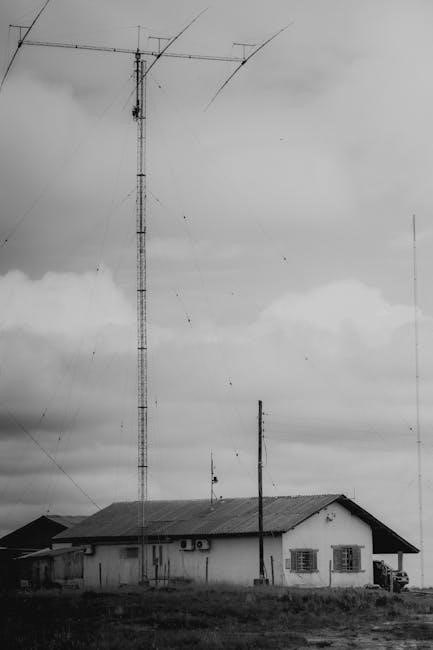
Enhancing reception with an external antenna significantly improves the Midland WR120’s ability to receive NOAA weather broadcasts, particularly in areas with weak signal strength or challenging terrain. The WR120 is equipped with an external antenna jack, allowing connection to a more powerful antenna for increased range and clarity.
Refer to the WR120EZ_User_Manual_v.2_070919_5 for specific instructions on connecting an external antenna, ensuring proper impedance matching for optimal performance. It’s crucial to use a compatible antenna designed for the NOAA weather radio frequencies. Improper antenna connection can potentially damage the radio or reduce its effectiveness.
Experiment with antenna placement to find the location that yields the strongest signal. Higher elevations and clear lines of sight to NOAA transmitters generally provide the best results. Regularly check the antenna connection to ensure it remains secure and free from corrosion. Utilizing an external antenna is a proactive step towards reliable weather alerts.
Understanding the Radio’s Memory Function
The Midland WR120 features a memory function allowing users to store programmed S.A.M.E. codes for specific counties or areas, streamlining the alert process. This eliminates the need to repeatedly enter codes each time the radio is powered on or reset, ensuring timely notifications for relevant weather events.
Consult the WR120EZ_User_Manual_v.2_070919_5 for detailed instructions on accessing and utilizing the memory function. The manual outlines the steps for saving, recalling, and deleting stored S.A.M.E. codes. Properly utilizing this feature is vital for receiving targeted alerts, minimizing false alarms from distant locations.
Remember that the memory can store multiple codes, enabling monitoring of several areas. Regularly review and update stored codes to reflect any changes in location or coverage needs. The memory function enhances the WR120’s usability and ensures personalized weather alerts.
Accessing the Full User Manual (WR120EZ_User_Manual_v.2_070919_5)
The comprehensive Midland WR120 user manual, designated WR120EZ_User_Manual_v.2_070919_5, is readily available online through multiple sources. Accessing this document is crucial for maximizing the radio’s functionality and understanding all its features.
Platforms like the Internet Archive host the manual for free download, borrow, or streaming. Additionally, websites such as manuals.plus provide direct access to the PDF file. These resources offer detailed instructions, troubleshooting tips, and explanations of all controls and settings.
The manual covers everything from initial setup and S.A.M.E. code programming to advanced features and external antenna usage. Downloading and reviewing the WR120EZ_User_Manual_v;2_070919_5 ensures users can confidently operate their weather radio and stay informed during emergencies.